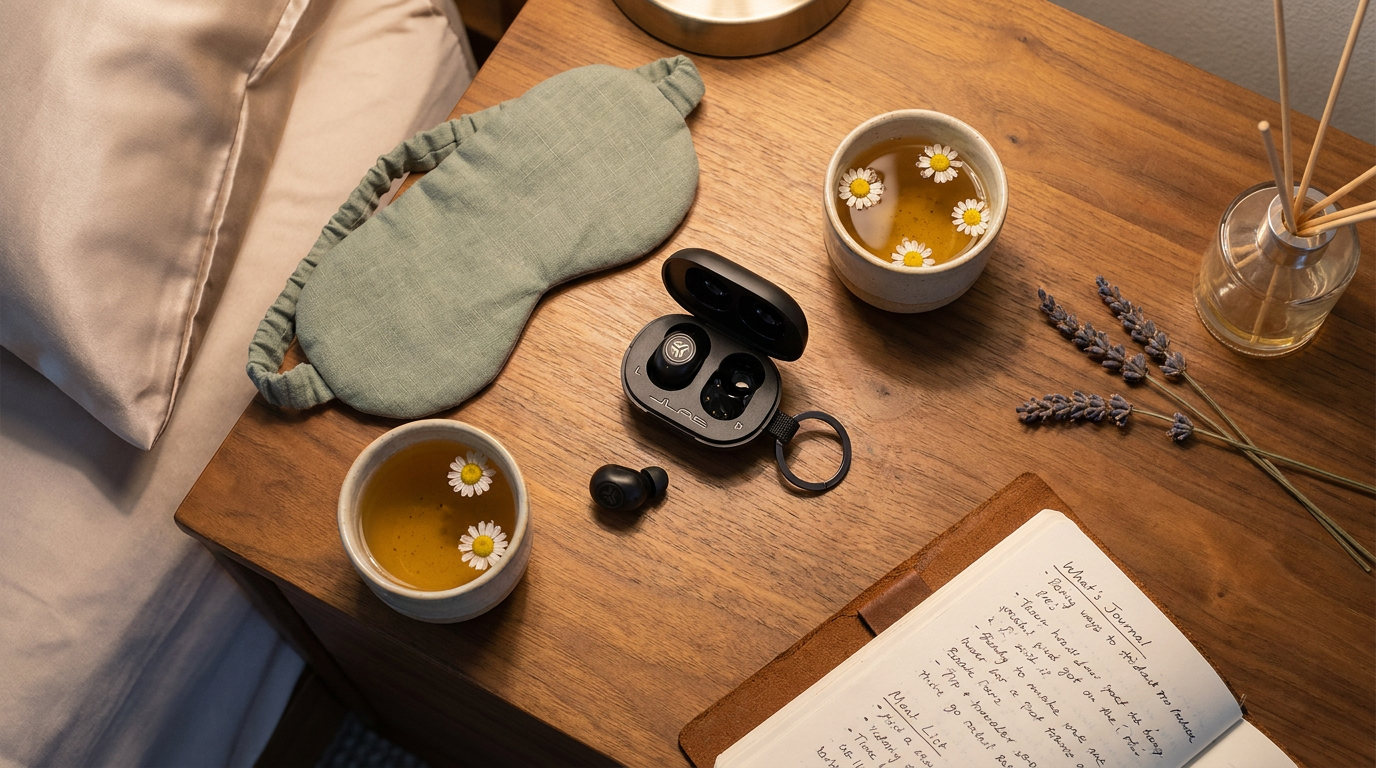
Resting Easy with Noxpods for Nighttime Quiet
 Jordan HaleStaff Writer
July 23, 2026. This exploration details the evolving landscape of audio technology designed specifically for the bedroom. It is written for sleepers who need to reclaim their rest from urban noise and snoring partners.
The first thing I noticed was the sharp contrast between the silence of my bedroom at 2:00 AM and the low-frequency hum of the city outside. For years, I tried to ignore the rhythmic rattling of an old radiator and the distant sound of late-night traffic, but the human brain is remarkably stubborn about latching onto inconsistent sounds. According to SoundGuys, effective active noise cancellation (ANC) in sleep-focused devices is particularly vital in the 20-200Hz range, where traffic and snoring typically reside. While traditional earbuds are often too bulky for a pillow, the industry has shifted toward ultra-low-profile designs. I spent weeks testing how different shapes interact with a pillowcase, looking for that elusive point where technology disappears and only the quiet remains. Choosing noise cancelling earbuds for sleeping requires a delicate balance; the device must be powerful enough to mask a partner's snoring but small enough that it doesn't ache against the ear cartilage by dawn. Somewhere around week two, the difference between a standard earbud and a dedicated sleep device became undeniable.
It turns out that the engineering behind Noxpods sleep earbuds focuses specifically on this intersection of physical comfort and acoustic isolation. Unlike standard headphones that protrude from the ear, these are designed to sit flush within the concha, allowing the ear to rest naturally against the pillow. This is the core of how Noxpods work: they combine a physical seal with internal components that don't create pressure points for side sleepers. In my own testing, I found that the weight distribution prevents the 'plugged' feeling that often leads to middle-of-the-night removal. While the Anker Soundcore Sleep A30 has been noted by CNN Underscored for offering a combination of sleep-friendly design and active noise cancellation, the specific ergonomics of a device remain the most personal factor. The Noxpods approach prioritizes a seamless fit that survives tossing and turning, ensuring that the noise-masking properties stay consistent even as you change positions. I keep coming back to the way the silicone tips feel—soft enough to compress but firm enough to maintain the acoustic seal necessary to keep the outside world at bay.
When deciding on the right pair for your nightly routine, the framework usually comes down to three pillars: profile, battery, and sound profile. If you are a side sleeper, the profile is non-negotiable; any protrusion will eventually cause soreness. Battery life is equally critical, as many ANC-enabled devices, like the Soundcore Sleep A30, may struggle to reach a full eight hours depending on the settings used. You should also consider whether you prefer a device that plays external media or one that focuses strictly on pre-loaded masking sounds. Use this checklist as you evaluate your options:
- Verify the 'flush-to-ear' design by looking at side-profile photos to ensure the buds do not extend past the tragus.
- Check the battery specifications for continuous play time with ANC enabled to ensure it covers your full sleep cycle.
- Assess the variety of included eartips, as a secure fit is the only way to achieve effective passive isolation.
- Determine if the device supports 'auto-switch' features that transition from your audio to masking sounds once you fall asleep.
- Look for an IP rating if you are concerned about moisture or sweat during warmer nights.
Sources
- The best headphones for sleeping in 2026, tried and tested
- Best earbuds and headphones for sleeping in 2026
- The Best Cheap Wireless Earbuds for Sleeping - July 2026