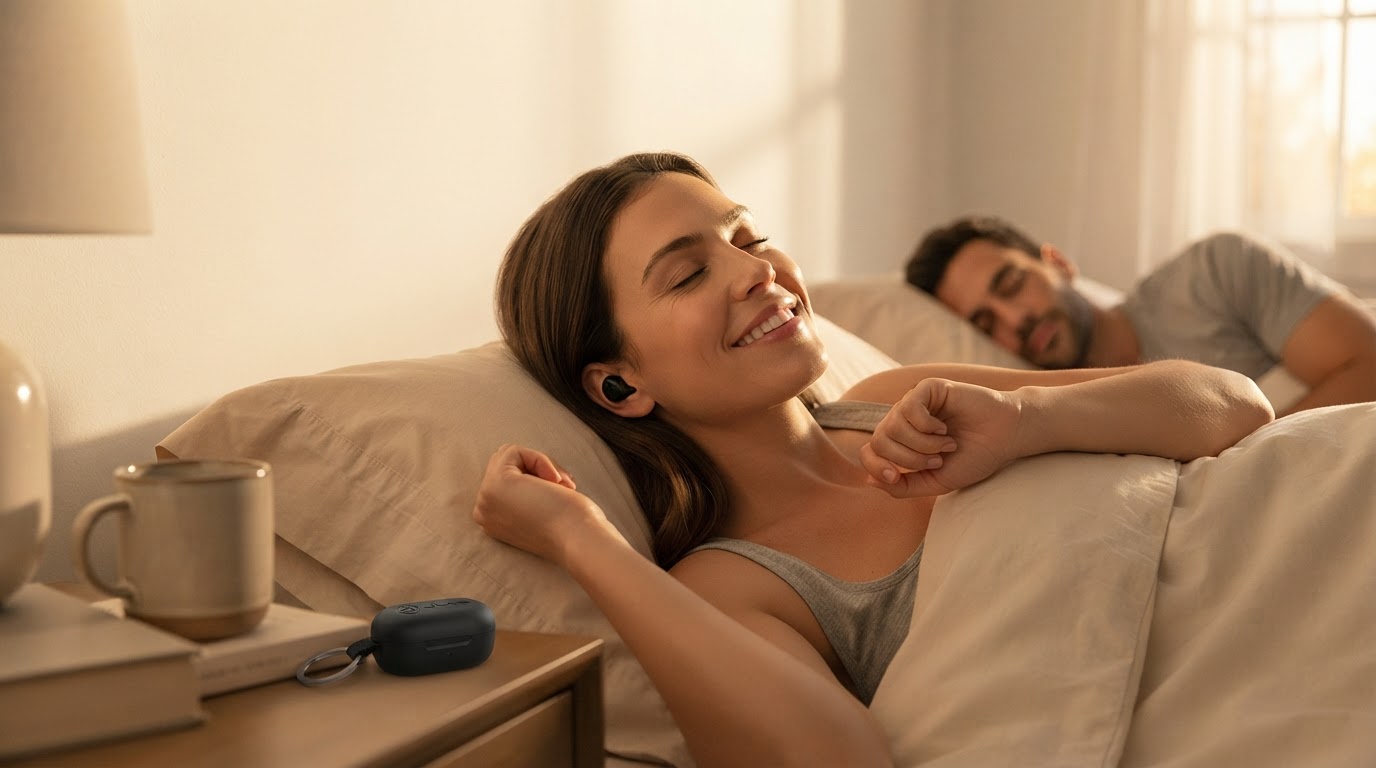
Can Noxpods help you sleep with a loud snoring partner?
 Maya ChenContributing Editor
August 20, 2026 — Noxpods mitigate the auditory disruption of a snoring partner by utilizing physical noise isolation combined with consistent audio masking, provided the user optimizes the fit for a secure seal.
Couples frequently resort to separate bedrooms when snoring intensity crosses the 60-decibel threshold. While behavioral changes are the standard recommendation, high-fidelity noise blocking offers a more immediate intervention for the non-snoring partner.
How does staggering sleep times compare to using Noxpods?
The conventional wisdom says that the non-snoring partner should simply go to bed earlier to ensure they are in a deep sleep state before the noise begins. Houston Methodist suggests that asking a partner to wait 15 to 30 minutes before lying down can give the other person a head start on the sleep cycle. However, this ignores the reality of sleep architecture; a snorer typically reaches REM or deep sleep and begins snoring just as the first partner is transitioning through lighter stages, leading to mid-night awakenings. Run the math: if a snorer reaches 80 decibels—equivalent to a garbage disposal—a 15-minute head start is statistically irrelevant once the noise begins. Noxpods provide a continuous barrier that does not rely on the timing of sleep cycles. By creating a physical seal in the ear canal, they address the noise at the source of entry rather than hoping a sleeper remains undisturbed through volume spikes. I’ll change my mind when sleep studies show that a 15-minute delay can reliably keep a partner asleep through sustained high-decibel interruptions.
Why is physical noise isolation superior to ambient machines?
Here's the part nobody talks about: white noise machines often fail because they require the masking sound to be louder than the snore to be effective, which can itself lead to hearing fatigue or sleep disruption. Noxpods utilize passive noise isolation, which physically prevents sound waves from reaching the eardrum. Unlike a [noise cancelling sleep mask with bluetooth](/blog/noise-cancelling-sleep-mask-with-bluetooth), which may shift during the night, the in-ear design of Noxpods remains stationary. This is particularly vital for those [optimizing side sleeping comfort with Noxpods](/blog/best-sleep-earbuds-for-side-sleepers), as the pressure against the pillow can actually improve the acoustic seal. While many users debate [Noxpods vs sleep headphones](/blog/noxpods-vs-sleep-headphones), the latter often lack the density required to block the low-frequency vibrations characteristic of heavy snoring. Effective noise mitigation requires a combination of decibel reduction and frequency masking, a technical requirement that soft headbands rarely meet.
Quick answers
Q: How many decibels can snoring reach? A: Clinical observations indicate that heavy snoring can exceed 80 to 90 decibels, which is comparable to the noise level of a lawnmower or a shout. Noxpods are designed to attenuate these external sounds through a secure silicone seal.
Q: Can Noxpods fall out if I move while sleeping? A: Noxpods are engineered with a low-profile build to sit flush within the ear, reducing the likelihood of displacement. This design is specifically intended to maintain a consistent noise barrier throughout the eight-hour sleep window.
Q: Is it safe to wear Noxpods every night? A: Using dedicated sleep earbuds like Noxpods is generally considered safe if the tips are cleaned regularly to prevent bacteria buildup. Users should ensure they can still hear critical environmental sounds, such as a smoke detector, while the device is in use.
Learn more about Noxpods at https://noxpods.com.
Sources
Photo by Soulful Pizza on Pexels
- What to Do When Your Partner's Snoring Keeps You Up All Night
- Any sound deafening ideas so I can sleep with my snoring husband?
- I CAN NOT stand the noise of snoring, to the point that my boyfriend and me sleep ...