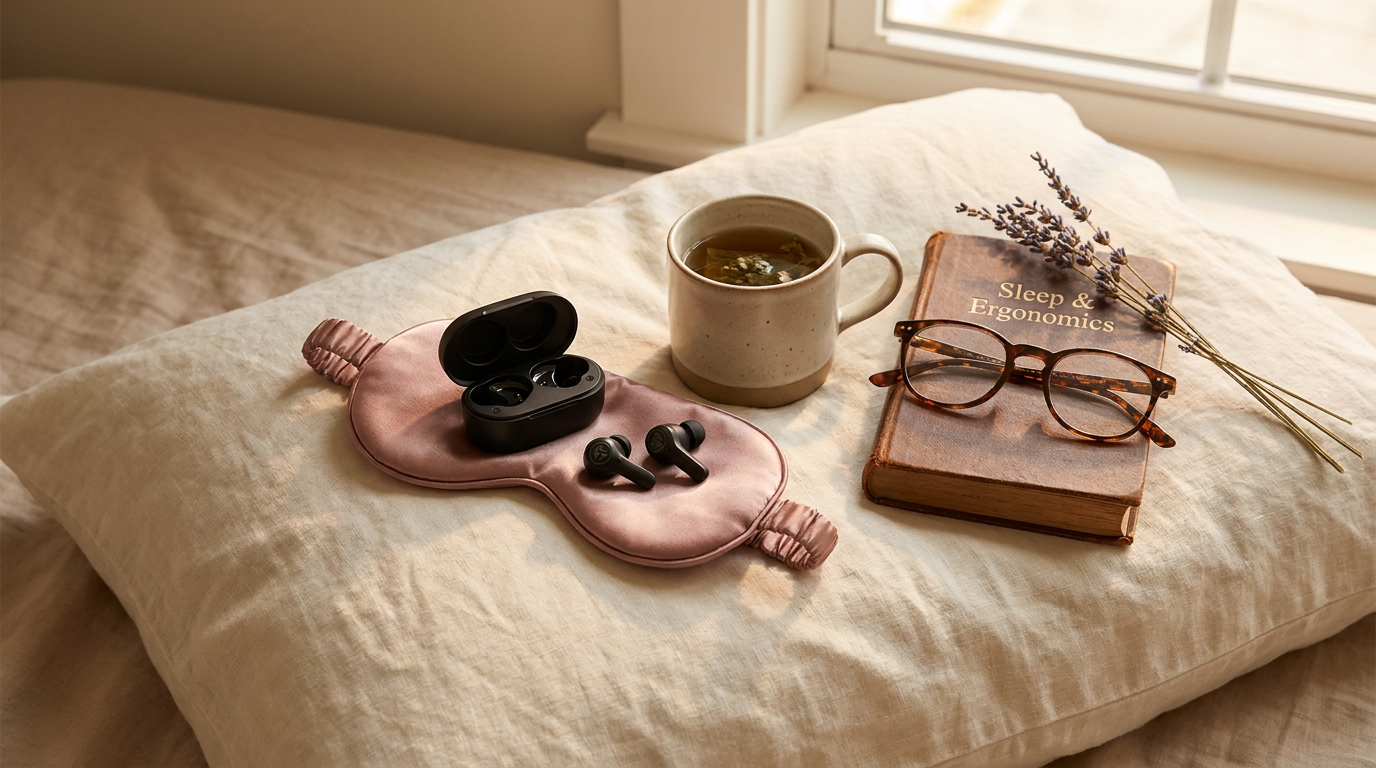
Noxpods Engineering for Ergonomic Side Sleeping Comfort
 Maya ChenContributing Editor
July 23, 2026. This analysis examines the physical constraints of in-ear audio devices when subjected to lateral pillow pressure. It is written for side sleepers who have found standard consumer electronics incompatible with their primary sleep position.
The Mechanical Failure of Traditional Earbuds
The conventional wisdom says that any small earbud can serve as a sleep aid if the volume is low enough. This ignores the basic physics of the ear canal under load. When a side sleeper rests their head, the pillow exerts a distributed force across the pinna, which in turn presses the earbud deeper into the auditory canal or against the tragus. According to Head-Fi.org discussions on earbuds for side sleepers, the primary grievance is not sound quality but the physical ache caused by the 'lever effect' of protruding stems or bulky housings. Most manufacturers design for verticality—staying in while running—rather than horizontal compression.
Here’s the part nobody talks about: even highly-rated models like the Soundcore Space A40, which Scarbir notes allows for side sleeping in average-sized ears without a support hand, still rely on a friction-fit that can shift during REM cycles. When you compare Noxpods vs sleep headphones, you see that the latter often tries to solve the pressure problem by wrapping the head in fabric, which introduces thermal regulation issues. The failure of the industry has been a refusal to acknowledge that a side sleeper’s ear is a high-pressure environment. Most 'mini' buds are simply shrunken versions of standard tech, retaining the same high-profile silhouette that creates a painful fulcrum against the pillow. This structural oversight leads to common injuries ranging from simple cartilage soreness to external otitis caused by trapped moisture and excessive pressure. Learning how to sleep with earbuds in comfortably requires more than just a soft pillow; it requires a device that does not fight the pillow in the first place.
Noxpods and the Mitigation of Lateral Pressure

Photo by Michael Burrows on Pexels
Noxpods are engineered with a specific low-profile geometry that addresses the displacement issues found in standard audio gear. While many users search for the best sleep headphones for side sleepers, they often overlook the necessity of a flush-mount fit. The Noxpods chassis is designed to sit within the concha of the ear, rather than protruding beyond the tragus. This ensures that when the head is turned, the pillow contacts the ear’s natural cartilage rather than a plastic housing. By distributing the inevitable pressure across a wider, flatter surface area, the device avoids the localized 'poking' sensation that triggers wakefulness.
Run the math: a standard earbud protrudes roughly 5mm to 8mm from the ear canal. When compressed by a 10lb human head against a medium-firm memory foam pillow, that protrusion translates into significant PSI on the sensitive skin of the ear canal. Noxpods reduce this protrusion to near-zero. This architectural choice is critical because it maintains the seal necessary for passive noise isolation without the physical cost. Furthermore, the internal component layout is shifted to the periphery of the housing, allowing the center—the point of highest pressure—to remain as thin as possible. Unlike the best sleep headphones for side sleepers which often use bulky drivers that press into the temple, Noxpods focus on the internal ear anatomy. This is why the process of how to sleep with earbuds in comfortably is fundamentally different when the hardware is purpose-built. We are not just looking for 'small' buds; we are looking for a specific displacement-to-volume ratio that preserves the ear's natural shape under lateral load.
A Framework for Selecting Sleep-Compatible Audio
When evaluating hardware for nocturnal use, consumers must move past the marketing fluff of 'ultra-soft' and look at the hard specs of the housing. A device is only as comfortable as its thickest point. If you are assessing whether a device will actually function for an eight-hour sleep cycle, use the following technical checklist to vet your options. If the manufacturer cannot provide these specifications, they are likely selling a standard earbud rebranded for sleep.
- Total Protrusion Depth: Measured from the base of the eartip to the outer edge of the shell; for side sleeping, this must be under 4mm.
- Housing Curvature: The outer face must be convex or flat; any concave edges or sharp ridges will catch on pillowcase fibers and dislodge the unit.
- Weight Distribution: The center of gravity must be located deep within the ear canal to prevent the 'pendulum effect' during head rotation.
- Material Durometer: The outer casing should have a soft-touch finish to reduce friction against bedding, which minimizes micro-noises (cable thumping or plastic creaking).
- Venting Architecture: Side sleeping creates a pressure seal; the device must have a small vent to prevent ear pressure buildup (the 'plunger effect') when pressing into a pillow.
Sources

Photo by Ketut Subiyanto on Pexels
- What earbuds are comfortable for side sleeping?
- Earbuds for Side Sleepers? | Headphone Reviews and Discussion
- The Best Cheap Wireless Earbuds for Sleeping - July 2026