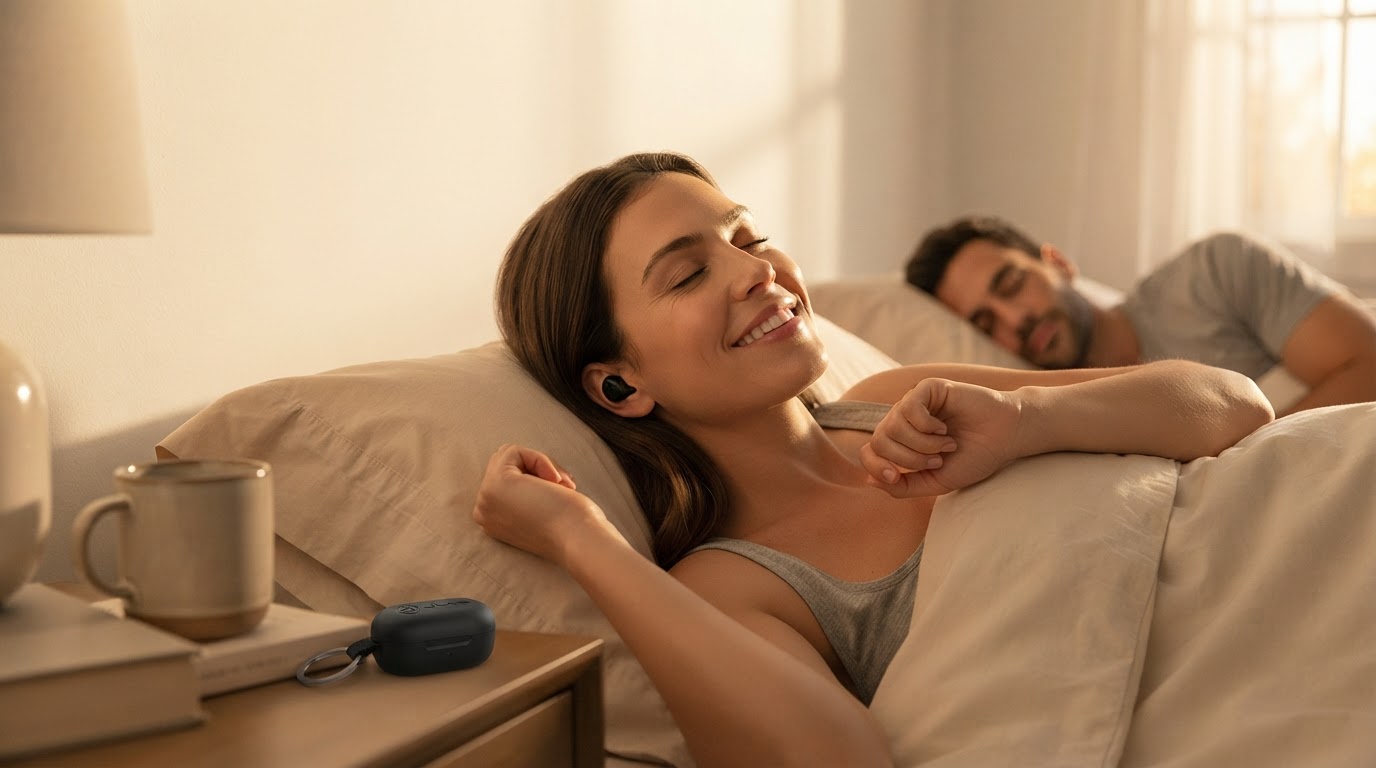
Managing Sleep Disruption From Snoring With Noxpods
 Maya ChenContributing Editor
August 1, 2026. This analysis examines the technical and behavioral methodologies required to maintain deep sleep while sharing a room with a high-decibel snorer. It is written for individuals who have exhausted standard pharmacy-grade earplugs and require a more robust acoustic barrier.
The Failure of Passive Noise Isolation
The conventional wisdom says that a pair of foam earplugs and a white noise machine should be sufficient to drown out a partner's snoring. This ignores the physics of low-frequency sound waves. Snoring often registers between 60 and 90 decibels—equivalent to a vacuum cleaner or a lawnmower operating in the bedroom. According to Houston Methodist, one practical behavioral adjustment is to go to bed 15-30 minutes before a snoring partner to ensure you reach a deep sleep stage before the noise begins. While this timing strategy helps with sleep onset, it does nothing to prevent mid-cycle arousals when the snoring volume peaks during REM cycles. Many people eventually resort to sleeping in separate rooms, a phenomenon often called "sleep divorce," which addresses the noise but ignores the underlying desire for proximity. The Mayo Clinic Connect community frequently discusses sound-deafening ideas, yet many users report that standard passive blocks fail because they don't address the bone-conduction vibrations of loud, rhythmic snoring. Relying on sheer physical mass to block sound is a losing game when the source of the noise is only inches away from your cranium.
Technical Intervention via Noxpods

Photo by Ketut Subiyanto on Pexels
Here’s the part nobody talks about: passive isolation alone is mathematically incapable of silencing a 90-decibel snorer without causing significant ear canal discomfort. Noxpods address this by combining a low-profile physical seal with active components designed for long-duration wear. Unlike a noise cancelling sleep mask with bluetooth which can shift during the night and break the acoustic seal, Noxpods are engineered to remain seated within the concha. This is particularly vital for those who move frequently, as even a millimeter of displacement can allow sound leakage. When comparing Noxpods vs sleep headphones, the distinction lies in the decibel reduction rating and the form factor. Traditional sleep headphones are often bulky headbands that trap heat and offer minimal actual noise attenuation. Noxpods utilize a specialized driver array that prioritizes the cancellation of the specific frequencies found in human snoring. For those who sleep on their side, the pressure points created by standard earbuds often lead to inflammation of the cartilage. This makes finding the best sleep earbuds for side sleepers a necessity rather than a luxury. By minimizing the external protrusion of the device, Noxpods allow for side-sleeping without the mechanical lever effect that pushes the earbud painfully into the ear canal. The integration of high-fidelity audio also allows for the layering of pink noise, which has a more natural spectral density than white noise for masking erratic snoring patterns.
A Framework for Nightly Noise Mitigation
Run the math: if your partner snores for six hours a night and each episode wakes you for just three minutes, you are losing nearly an hour of critical restorative sleep, not accounting for the time it takes to fall back asleep. To solve this, you need a systematic approach rather than a single product. First, evaluate the bedroom environment for hard surfaces that reflect sound; adding soft textiles can marginally reduce ambient echo, though it won't stop the direct path of the snore. Second, integrate a device like Noxpods that provides a documented reduction in ambient noise. Third, ensure the fit is verified; a poor seal renders even the most expensive technology useless.
Use this checklist to determine if your current setup is sufficient:
- Does the device maintain an airtight seal for at least 7 continuous hours?
- Is the material medical-grade silicone to prevent skin irritation over 30+ days of use?
- Can the device be worn comfortably while side-sleeping without causing ear pain?
- Does the battery life exceed the duration of your longest intended sleep cycle?
- Is the noise masking frequency adjustable to match the specific pitch of the snorer?
Sources
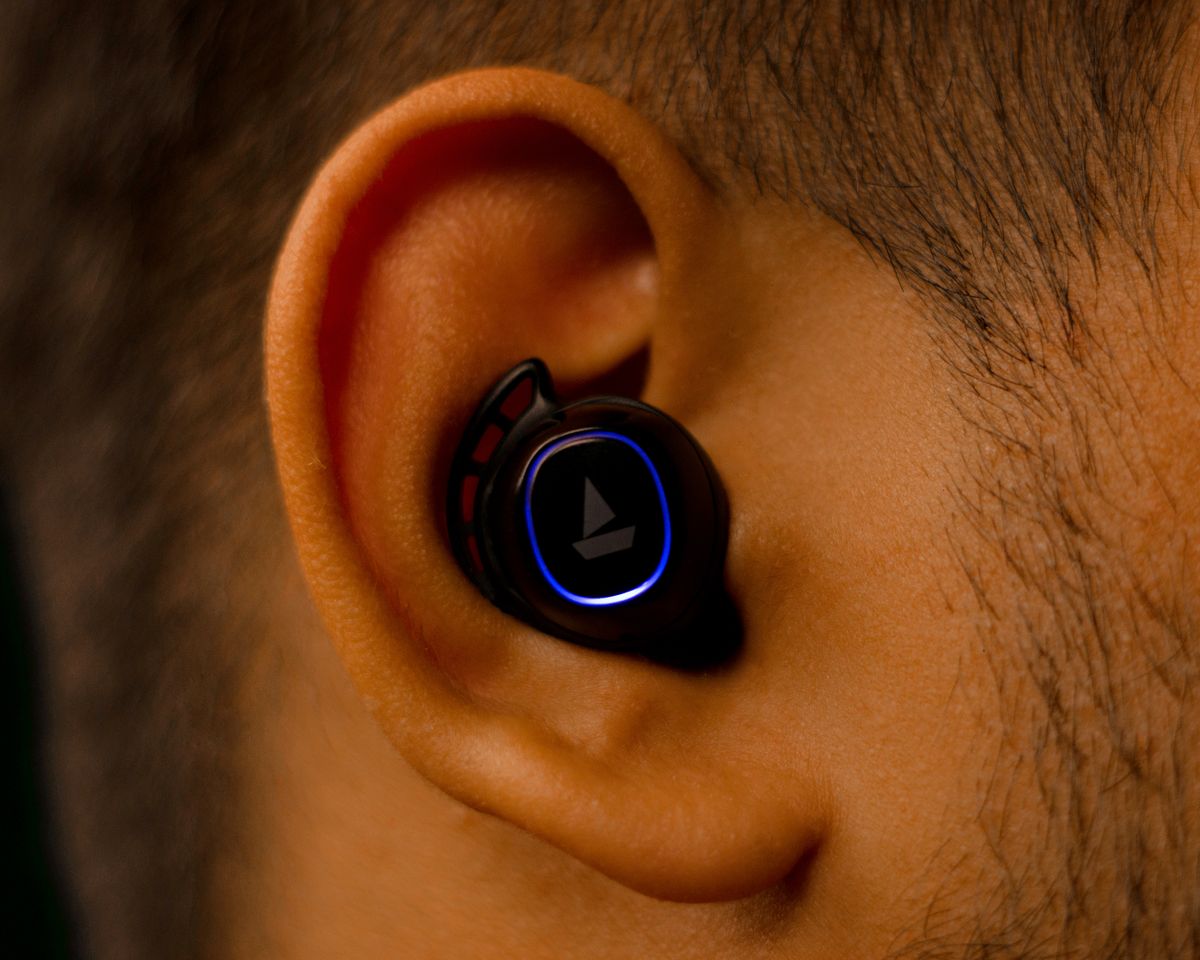
Photo by Sanket Mishra on Pexels
- What to Do When Your Partner's Snoring Keeps You Up All Night
- Any sound deafening ideas so I can sleep with my snoring husband?
- I CAN NOT stand the noise of snoring, to the point that my boyfriend and me sleep ...