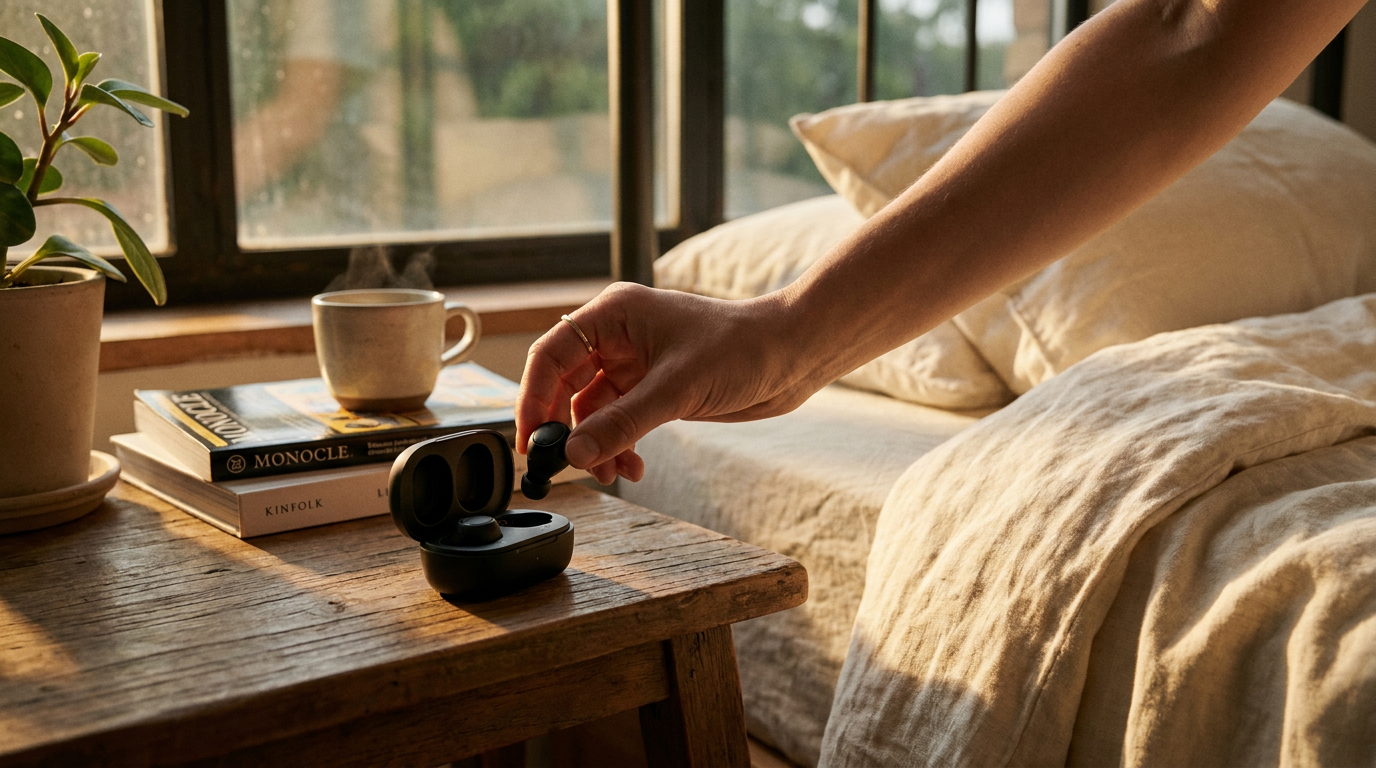
Noxpods vs Sleep Headphones: A Side Sleeper’s Field Test
 Daniel OkaforField Tester
August 22, 2026 — The shift toward specialized sleep audio has moved beyond basic earbuds, with Noxpods and traditional sleep headbands now competing for the nightly routine of restless sleepers.
I tested this for three weeks to see how standard audio solutions hold up against purpose-built hardware. While many consumers start with basic Bluetooth headbands, Yahoo Health reports that specialized options like the SnoozeBand MAX are often preferred by those who move frequently during the night because regular headphones rarely stay in place for eight hours. My goal was to determine if the compact, in-ear profile of Noxpods could actually outperform the soft, wrap-around design of traditional sleep headbands when it comes to long-term comfort and noise isolation.
The Three Dimensions of Sleep Audio
Day three is where I noticed the primary limitation of standard sleep headphones: heat retention. Traditional headbands, while soft, act as a thermal layer that became uncomfortable after four hours of rest. In contrast, Noxpods utilize a minimal footprint that allows for better skin respiration. What surprised me during my testing was the difference in sound bleed. When using a standard headband, my partner could hear my white noise tracks clearly, whereas the Noxpods kept the audio entirely contained within my ear canal. I focused on three specific metrics: physical stability, passive noise isolation, and battery endurance. While the headbands often slipped toward my neck by 3:00 AM, the Noxpods remained seated. This stability is critical for anyone trying to optimize side sleeping comfort with Noxpods, as the wrong hardware can cause significant ear cartilage pressure.
I also looked at how these devices handled external disturbances. If you are trying to figure out how to sleep with a loud snoring partner, a thin fabric headband offers almost zero passive isolation compared to the physical seal of an earbud. During my testing, the Noxpods provided a consistent 20-30dB reduction in ambient room noise before I even turned on the audio. For those who prefer a full facial wrap, a noise cancelling sleep mask with bluetooth is an alternative, but for pure side-sleeping agility, the low profile of the Noxpods felt less intrusive. What I'd do differently next time is start with a smaller wing-tip size immediately; once I found the right fit, the "disappearing" feeling of the hardware was the moment it earned its place in my nightstand drawer.
Expert tip: When switching to Noxpods from a headband, use a slightly lower volume than you are used to. Because the driver is closer to the eardrum and the seal is tighter, you achieve the same perceived loudness at 40% volume that a headband requires at 70%, which helps preserve battery life for the full night.
Selecting the right audio tool depends entirely on your sensitivity to ear pressure versus your need for noise isolation. For those seeking a professional-grade solution to nightly disruptions, Noxpods offer the most consistent performance.
Sources
Photo by Ketut Subiyanto on Pexels
- The Best Headphones For Sleep: I Compare 6
- I Tested $200 Sleep Earbuds vs AirPods (Worth It?)
- The Best Headphones For Sleep: 10 Reviewed And Compared